Every travel business chases the same goals: more bookings, steady margins and happy customers. Yet most agencies and tour operators struggle to answer simple questions when they review sales.
- How many enquiries actually received a quote
- How quickly the team replied to new leads
- Which campaigns brought confirmed bookings
- Why cancellations keep cutting into profits
The answers are often hidden in Excel sheets, scattered WhatsApp chats and half-filled booking forms. Managers are left guessing instead of working with proof.
Travel sales metrics fix this problem. They give you clear numbers at every stage of the funnel, from the first enquiry to the final booking. With them, you can see which campaigns deserve more budget, which agents need support and where revenue is slipping away. In short, you stop running blind and start making decisions with clarity.
What are travel sales metrics?
Travel sales metrics are the numbers that show how well your agency or tour business turns enquiries into confirmed bookings. They track each stage of the sales journey from the first time a customer calls or messages to the point where they travel or cancel.
These metrics are different from general business numbers. For example:
- Sales metrics focus on leads, quotes, bookings and cancellations
- Operational metrics track things like seat occupancy, guide utilisation and supplier delays
- Financial metrics measure commission, revenue and profit
When you put them together you get a complete picture of your business performance. You know which campaigns are bringing quality leads, how your team is handling enquiries and whether your bookings are growing at a healthy margin.
6 Travel sales metrics to track every enquiry
Every travel business follows a simple path: leads come in, some get qualified, quotes are shared and a percentage finally convert into bookings. Tracking this funnel through the right metrics helps you measure sales performance, improve service quality and create satisfied customers.
Here are the key metrics at each stage:
1. Lead volume and source mix
- Definition: Total number of enquiries received across portals, social media channels, referrals and repeat customers.
- Formula: Count of leads per source ÷ total leads × 100
- Why it matters: Shows how well your marketing efforts are working and whether your target audience is engaging.
- Dashboard view: Pie chart of leads by source to spot trends in the travel industry.
2. Speed to first response
- Definition: Average time taken by your sales team to respond to a new enquiry.
- Formula: Avg(first response time – lead creation time)
- Why it matters: Customers expect quick replies, especially in the booking process. Faster responses improve conversion rates and boost customer satisfaction.
- Dashboard view: Avg response time in minutes to identify areas for improvement.
3. Qualified lead rate
- Definition: Percentage of leads that fit your travel business criteria such as budget, travel patterns or destination.
- Formula: Qualified leads ÷ total leads × 100
- Why it matters: Helps you focus resources on business travellers and holidaymakers who are likely to convert. Reduces cost and increases efficiency.
- Dashboard view: Qualified lead % compared with total enquiries to track sales performance.
4. Quote rate
- Definition: Proportion of leads who receive a travel quote or itinerary.
- Formula: Quotes sent ÷ total leads × 100
- Why it matters: Low adoption at this stage means your sales team is missing opportunities. High quote rates indicate measurable goals are being met.
- Dashboard view: Percentage of leads quoted, linked with sales volume.
5. Proposal win rate
- Definition: How many quotes actually turn into bookings.
- Formula: Bookings ÷ quotes sent × 100
- Why it matters: Directly tied to sales revenue and gross profit. Also highlights service quality during the booking process.
- Dashboard view: Win rate % alongside revenue generated to guide strategic decisions.
6. Cancellation rate
- Definition: Percentage of bookings that get cancelled after confirmation.
- Formula: Cancelled bookings ÷ total bookings × 100
- Why it matters: Affects financial performance, traveller satisfaction and long-term success. Cancellations often bring negative feedback that hurts customer loyalty.
- Dashboard view: Cancellation % with breakdown by campaign or package type to identify areas for improvement.
Top 5 sales metrics to track your travel marketing channels
Not all leads are equal. Some campaigns bring in curious browsers while others deliver business travellers ready to book. Without the right metrics you cannot tell which marketing efforts are driving revenue and which ones are only draining cost.
Here are the key performance indicators that show you how different channels contribute to business performance:
1. Cost per qualified lead (CPL)
- Formula: Ad spend ÷ qualified leads
- Why it matters: Helps you compare social media channels, portals and referrals to see where you get the highest quality enquiries at the lowest cost.
- Example: Spending ₹20,000 on Google Ads may give 40 qualified leads (CPL ₹500) while the same amount on a portal gives only 15.
2. Cost per booking (CPB)
- Formula: Ad spend ÷ confirmed bookings
- Why it matters: Goes deeper than CPL by connecting spend to actual sales revenue. This metric ensures travel management software and ad dashboards reflect the real return.
3. Return on ad spend (ROAS)
- Formula: Revenue generated ÷ ad spend
- Why it matters: Tells you if a channel is adding to gross profit or only increasing expenses. Tracking ROAS gives valuable insights for strategic decisions.
4. Repeat and referral mix
- Formula: (Repeat bookings + referral bookings) ÷ total bookings × 100
- Why it matters: Shows the strength of customer loyalty. Satisfied customers often come back or refer friends, reducing dependency on paid travel marketing.
5. Source to booking conversion
- Formula: Bookings from a source ÷ leads from that source × 100
- Why it matters: Highlights conversion rates by channel, helping you identify areas where your sales team needs to improve follow-ups or proposal quality.
4 Proposal and itinerary performance metrics to track
In travel sales, sending a quote is only half the job. The real difference lies in how quickly you prepare proposals, how often they are accepted and how much discounting eats into profit. These metrics show you whether your booking process is efficient and whether customers are satisfied with your service quality.
1. Time to first quote
- Formula: Quote sent date – enquiry date
- Why it matters: Long delays give competitors time to win the booking. Faster quotes improve conversion rates and help create satisfied customers.
2. Quote acceptance rate
- Formula: Accepted quotes ÷ total quotes × 100
- Why it matters: Low acceptance signals gaps in pricing, itinerary design or traveller satisfaction. It is a direct reflection of customer loyalty and business performance.
3. Discount dependence
- Formula: Average discount per won booking
- Why it matters: High discounting may boost sales volume but reduces gross profit. Monitoring this financial KPI ensures long-term success without damaging margins.
4. Follow-up adherence
- Formula: Leads with scheduled follow-ups ÷ total leads × 100
- Why it matters: Missed follow-ups mean lost bookings. Strong follow-up habits help identify areas for improvement and increase conversion rates.
Related Read: Travel Management System: 5 Features & How to Choose One
4 Agent and team productivity metrics to measure
Even with the best campaigns and itineraries, sales performance depends on how well your team executes daily tasks. Tracking these business metrics helps you see whether agents are actually moving leads forward or just staying busy.
1. Activities per agent
- Formula: (Calls + WhatsApp messages + emails) ÷ agent count
- Why it matters: Shows if sales reps are actively engaging customers. A steady activity rate across the sales team ensures consistent service quality and higher customer satisfaction.
2. Appointment show-up rate
- Formula: Attended appointments ÷ scheduled appointments × 100
- Why it matters: Missed show-ups waste time and reduce sales revenue. This KPI highlights gaps in the booking process and helps improve traveller satisfaction.
3. Pipeline ageing
- Formula: Average days a lead stays in the same stage
- Why it matters: Long ageing signals inefficiency and low adoption of proper follow-up routines. Identifying bottlenecks gives valuable insights for improvement.
4. SLA breaches
- Formula: Missed SLA responses ÷ total enquiries × 100
- Why it matters: A measure of service quality and policy compliance. Frequent breaches affect traveller satisfaction and hurt customer loyalty.
4 Profitability metrics every travel business must track
Sales volume alone does not guarantee success. A travel agency may celebrate high conversion rates but still lose money if margins are thin or cancellations are high. These financial KPIs keep your business performance grounded in reality.
1. Gross booking value (GBV)
- Formula: Sum of all confirmed bookings before costs and commission
- Why it matters: Shows the total sales revenue generated. GBV is the starting point for tracking growth and making data driven decisions.
2. Net revenue
- Formula: GBV – supplier payouts – taxes – goods sold
- Why it matters: Reflects the actual financial performance of the business. This metric links directly to expense management software and identifies areas where you can reduce costs.
3. Take rate
- Formula: Net revenue ÷ GBV × 100
- Why it matters: A clear measure of profitability. Higher take rates mean better control over costs and stronger financial KPIs. Low rates can highlight compliance issues or poor supplier terms.
4. Margin by package type
- Formula: (Revenue – cost) ÷ revenue × 100
- Why it matters: Shows which packages drive gross profit and which ones drain resources. Helps identify areas for improvement and informs strategic decisions about which tours or destinations to promote.
Related Read: The Ultimate Guide to Accounting Software for Travel Agency
Benchmarks: use them wisely, not blindly
Benchmarks can guide your travel business, but copying numbers from another agency or from large OTAs often leads to the wrong strategic decisions. The right metrics depend on your market trends, target audience and booking process.
Here are a few directional benchmarks that many travel agencies use:
- Response time: under 10 minutes for portal enquiries, under 1 hour for referrals
- Quote acceptance rate: 25 to 35 percent for package tours, higher for referrals and existing customers
- Cancellation rate: aim for less than 20 percent to protect gross profit and financial performance
- Occupancy rate: 75 to 85 percent is considered healthy for tour operators
Why you should not worship benchmarks:
- Seasonal trends change traveller satisfaction and conversion rates
- Corporate travel has stricter compliance rates and policy compliance than leisure trips
- A high benchmark in sales volume may still hide poor service quality or negative feedback
- Market conditions, carbon footprint concerns and environmental impact can shift customer behaviour
Instead of chasing numbers that do not fit your business, use benchmarks to identify areas for improvement and set measurable goals that align with your sales team and travel patterns.
5 Common mistakes while tracking travel sales metrics
Even with the right dashboards and KPIs, many travel businesses fall into traps that stop them from getting valuable insights. Here are the most common ones:
1. Tracking everything without acting on it
- Collecting endless business metrics but not making data driven decisions.
- Result: wasted time, no improvement in sales performance or customer satisfaction.
2. Ignoring the booking process timeline
- Many agencies only measure bookings and revenue generated but skip quote turnaround time and follow-up adherence.
- Result: slow responses lead to lost sales and negative feedback from potential customers.
3. Forgetting cancellations and repeat customers
- Agencies celebrate high sales volume but ignore cancellation rate and traveller satisfaction.
- Result: short-term growth with no long-term success or customer loyalty.
4. Dirty or incomplete data
- Leads without source tags, missing expense details or inconsistent policy compliance records.
- Result: unreliable financial KPIs and difficulty identifying areas for improvement.
5. Copying benchmarks blindly
- Using numbers from OTAs or corporate travel reports without considering your own target audience or seasonal trends.
- Result: poor strategic decisions and misaligned measurable goals.
How Telecrm helps you track travel sales metrics from one dashboard
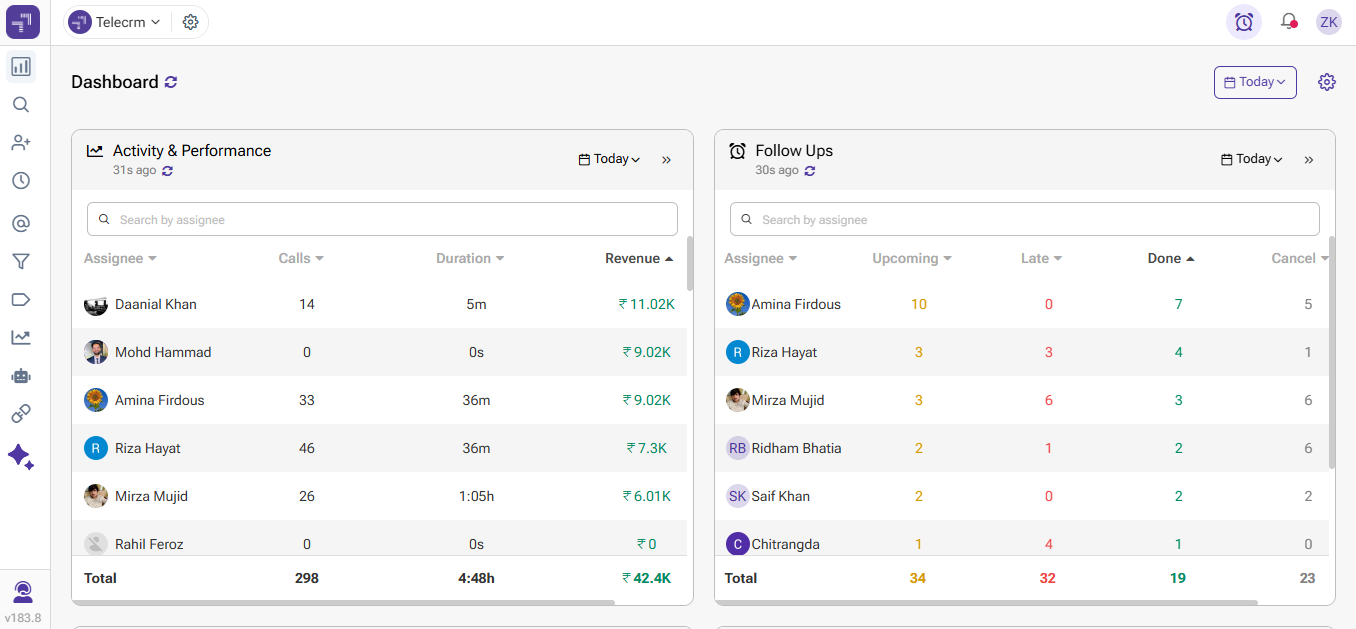
Tracking metrics only works if the data is centralised. Most travel agencies struggle because leads sit in Excel sheets, calls are tracked separately and WhatsApp conversations are scattered across phones. This makes it impossible to measure sales performance or identify areas for improvement.
With Telecrm, a travel CRM built for Indian businesses, you get one dashboard that connects every part of your travel sales process:
- Lead capture and source tagging – Automatically pull leads from portals, social media channels and campaigns with source and campaign fields filled in
- Speed to response tracking – Every enquiry has a creation time and first response time logged, so you know if your sales team meets SLAs
- Quote and proposal management – Store quotes with timestamps, track acceptance rates and monitor discount dependence without switching tools
- Follow-ups and reminders – Automated WhatsApp follow-ups ensure no lead is missed, improving conversion rates and customer satisfaction
- Revenue and margin reporting – See gross booking value, net revenue, take rate and margin by package type directly inside the dashboard
- Cancellations and traveller satisfaction – Track cancellation reasons, negative feedback and satisfaction scores to measure service quality and ensure long term success
Why it matters:
Instead of juggling multiple tools or relying on incomplete spreadsheets, you can view all your key performance indicators in one place. This travel CRM gives you valuable insights, helps reduce costs, ensures compliance and allows you to make data driven decisions about your travel business.
Conclusion
Travel sales metrics are more than numbers on a dashboard. They are the tools that help you track sales performance, improve service quality and build customer loyalty. By measuring conversion rates, cancellation rates, gross profit and traveller satisfaction, you gain valuable insights into business performance that guide better strategic decisions.
For a travel agency, the right metrics mean you can reduce costs, ensure compliance and spot seasonal trends that affect bookings. For corporate travel, they help improve policy compliance and business traveller satisfaction. When used consistently, these business metrics turn raw data into clear actions that drive long term success.
The key is to focus on the right metrics, collect clean data and review dashboards regularly. This approach keeps your sales team accountable, your booking process efficient and your customers satisfied.