
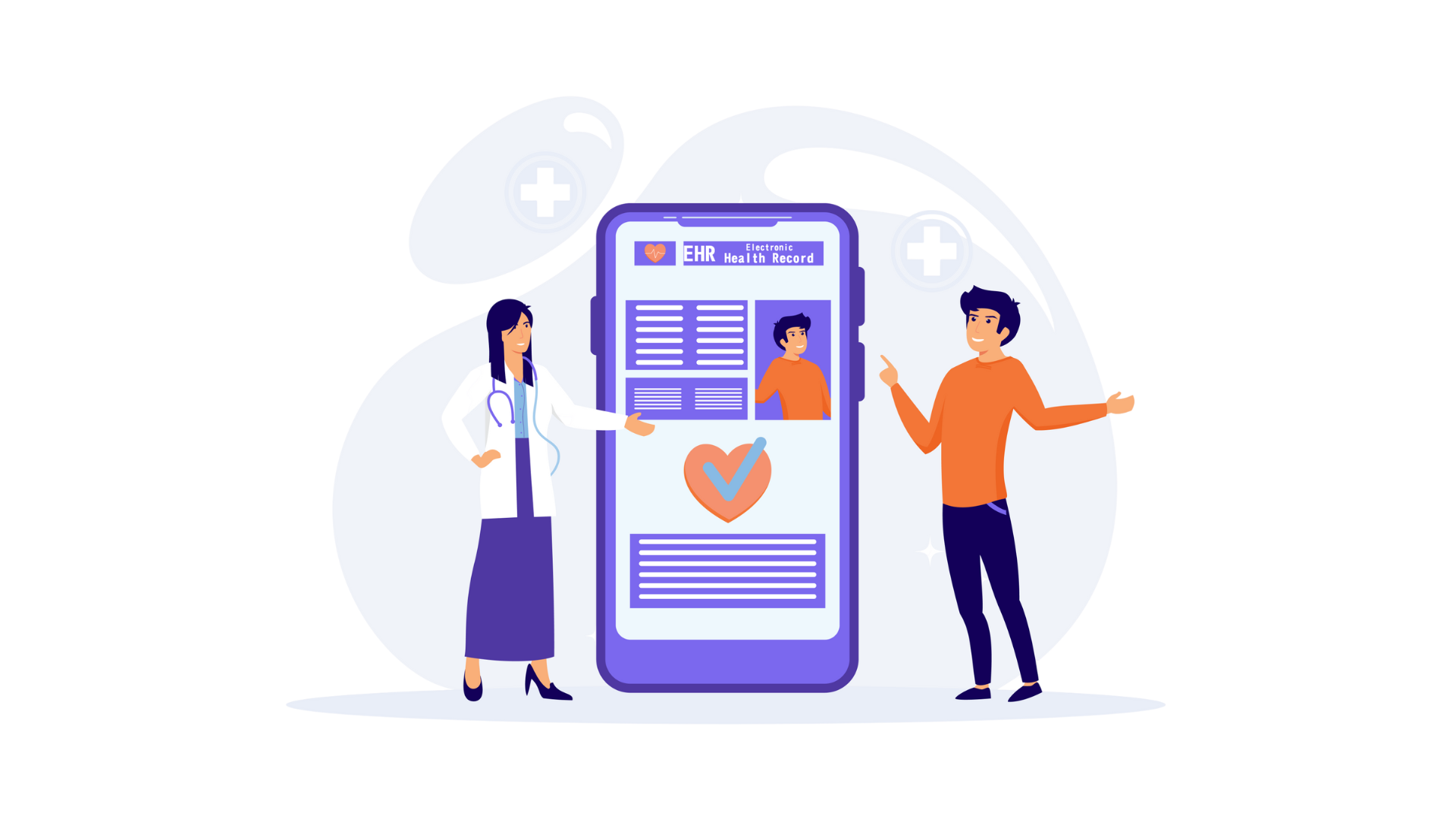
If you’ll ask me to name an industry where time holds the maximum value, it’ll undoubtedly be the healthcare industry. A sector where every delayed second can cost someone’s life, there’s hardly any scope of slowing down.
That’s where technology steps in to help. Hospitals across the country are now turning to WhatsApp chatbots which is a fast, reliable and patient-friendly way to ensure no query goes unanswered and no opportunity to deliver better care is missed.
In this blog, we’ll explore why hospital management systems are making the switch to WhatsApp chatbots, how they’re transforming patient well being and why adopting WhatsApp chatbot for your hospital or clinic might just be the smartest decision you make this year.
Let’s get started.
A WhatsApp chatbot for healthcare providers is a hospital’s virtual receptionist who never sleeps. It helps you stay connected with the patients through WhatsApp (the same app your patients are already using to forward good morning messages and family recipes) and is ready to chat 24/7.
Patients just send a “Hi” to your hospital’s official WhatsApp number and boom, the chatbot is there with instant replies, helpful options and smooth services. Want to check lab reports? Sorted. Booking appointment? Done. Curious about OPD timings? Answered in seconds, leading to patient satisfaction.
Think about how many phone calls your front desk gets daily asking the same questions. Now imagine offloading all of that to a chatbot that never loses patience. No more extra hospital staff needed just to remind patients of their appointment status. No more mobile apps that patients never open again. With WhatsApp, you meet them right where they already spend most of their time with timely access.
In short, it’s like your hospital’s new digital front door which is always open, always efficient and never cranky after pulling a night shift.
Now that you know what a WhatsApp chatbot is, the next question would naturally be what makes it a big deal for hospitals all around the country? Following are some of the key features of WhatsApp chatbots that are definitely hard to ignore –
Gone are the days of patients calling your reception desk 10 times just to book a slot. With WhatsApp chatbots, patients can browse available slots, book their appointments and even reschedule if something comes up all without having to deal with staff coordination. It’s like giving them a self-service counter but on their phone.
Hospitals never sleep but your reception staff definitely needs to. With WhatsApp chatbots, providing 24/7 healthcare services is just a message away. Whether it’s 3 a.m. or 3 p.m., patients receive instant replies without waking up anyone on your team.
WhatsApp chatbots can facilitate report delivery automation by sharing lab reports directly with patients in a secure way. It saves patients the trouble of waiting in line and helps them access reports easily on the WhatsApp app. In addition, fewer people in the waiting area means less chaos and more space for those who genuinely need care.
No-shows and missed medications can severely hamper the progress of your patients’ well-being. A WhatsApp chatbot can gently ping them about upcoming appointments, prescribed medicines or even post-surgery checkups, providing your patients a healthcare space with personalized care.
“Do you accept XYZ insurance?” “Cashless facility hai kya?” These are the kinds of questions that clog your billing department every day and is a great challenge for hospital management systems. Instead of making patients wait in line or keeping your staff glued to the phone, a healthcare chatbot can handle them instantly.
India is a country where the language changes every 100 kilometers. That’s why a WhatsApp chatbot that speaks multiple languages is a blessing. Greeting patients with a “Hello,” “Namaste” or “Vanakkam,” it makes your hospital feel warm and welcoming by using the patient’s preferred language. They feel more comfortable when they can ask questions in their own language and you build trust without extra effort.
I know you’ll agree with me on this one. Getting patients to share feedback is the toughest task of all. A WhatsApp bot makes it easier by sending quick surveys right after the visit. Patients can drop a rating or comment in seconds and you get actionable insights without awkward follow-up calls. It’s fast, convenient and way more effective than traditional methods.
Lastly, some advanced features can actually collect patient data, ask them about their symptoms and provide health tips on what to do next. For example, if someone reports chest pain, it can say, “Please visit the emergency immediately.” If it’s just a mild cough, it might suggest rest and hydration. It’s not replacing doctors but it helps patients get quick guidance.
This is the moment of truth. Let’s answer the primary question because of which you’ve read this blog till here – “Why are top hospitals switching to WhatsApp chatbots?”
Well, the answer is pretty simple: because it actually works.
Let’s break down the main reasons one by one:
Running a hospital is already hectic. You are overloaded with emergency cases, long OPD queues, impatient attendants every single day. On top of this, your staff also has to answer repetitive questions like:
When your front desk is buried under these calls, real emergencies can get delayed. By offloading FAQs, appointment scheduling and reminders to a WhatsApp chatbot, your staff gets the breathing room they deserve. They can now focus on high-value tasks like guiding patients at the hospital and not on answering the same question a multiple times.
Patients in today’s time expect healthcare to be as fast as ordering groceries online. Nobody wants to wait in line, fill out long forms or call a landline that’s always “busy.”
With a WhatsApp chatbot, the experience becomes seamless:
For patients, all their immediate needs are catered to in the best possible way. For hospital management systems, it means more streamlined queue management and satisfied patients who are far more likely to come back and recommend your services.
Hiring more staff just to handle calls or remind patients about appointments is expensive. And yet, most of that work is repetitive. Why would hospitals want to pay extra salaries for tasks that can easily be automated?
WhatsApp chatbots bring efficiency without impacting the hospital’s budget. In the past few years, hospitals have shifted to automated responses that cost a fraction of manual effort. That’s money saved which can be redirected to advanced healthcare services, infrastructure or training your healthcare providers.
Patients often judge hospital management systems not just by the doctors but also by the overall patient experience. A hospital that uses outdated systems and keeps patients waiting for basic information doesn’t exactly inspire confidence.
On the other hand, when patients see that they can interact with your hospital as easily as chatting with a friend on WhatsApp and receive instant responses, they feel that your hospital is modern, approachable and patient-first.
Patients are getting more digital-savvy by the day and the younger generation especially doesn’t want to “call and wait.” They want everything instant, simple and on messaging apps.
By adopting medical chatbots today and facilitating automated replies, top hospitals are preparing themselves for the new era of patient engagement because it makes them relevant in a world where digital-first healthcare is becoming the norm.
In short, top hospitals are switching to WhatsApp chatbots because they ease the staff’s burden, delight patients, save costs, improve brand image and set hospitals up for a tech-driven future. And honestly, once you see the real time results, there’s no going back to the old-school way.
It’s clear by now that onboarding a WhatsApp chatbot is only going to help healthcare providers in taking care of their patients. Virtual assistants that enable hospital enquiry automation are already transforming the way doctors and physicians interact with the patients. Here are some powerful ways healthcare providers across India can actually use WhatsApp chatbots:
“How long is the waiting time for Dr. Sharma today?” Instead of dozens of frustrated phone calls, the digital assistants can instantly update patients about OPD timings, doctor availability or changes in appointment booking.
Rather than asking patients to make a second trip to the hospital just to pick up a printed report or share their medical documents, hospitals can enable sharing of digital copies on the mobile devices itself.
Missed appointments or skipped medications can be risky. A WhatsApp bot can gently remind patients about their upcoming visits, vaccination schedules or even post-surgery instructions. It’s like having a polite but persistent friend who never forgets your health commitments.
One of the benefits of a WhatsApp chatbot is that it can broadcast important messages to thousands of patients at once. This ensures that no person is left unattended and the support team at your hospital is not overburdened with calls in case of an emergency.
Insurance claims are the most hectic to deal with. Your team needs to accumulate all the healthcare data and communicate the patient’s history to the insurance provider while at the same time answering endless queries from worried patients and their families.
A WhatsApp chatbot can simplify a big chunk of this chaos. Patients can quickly check:
Instead of awkwardly calling patients for feedback, a bot can send a short survey right after discharge or consultation. Patients are more likely to respond honestly on WhatsApp and hospitals get valuable insights to improve healthcare services.
Some advanced chatbots can about symptoms and guide patients toward the right next step: “Looks like you should see a doctor today” or “Might be mild, rest and monitor.” While it’s not a replacement for doctors, it helps patients take quicker and more informed decisions even when they face any concerns outside the visiting hours.
You know what a WhatsApp chatbot is, how it can help you provide valuable support to the patients and why doctors all around India and the world prefer them. But how do you get started?
Don’t worry, it’s not rocket science. In fact, it’s a lot simpler than you might think. Here’s a step-by-step way to bring WhatsApp chatbots into your hospital:
First things first, you need access to the official WhatsApp Business API. This ensures your hospital is verified, your number is trusted and users know they’re talking to you and not any fake account. Most chatbot solution providers will help you set this up quickly.
The next smart move for you is to partner with a provider that specializes in medical chatbots. In addition, CRM tools like Telecrm make this easier by combining WhatsApp chatbot automation with CRM capabilities.
You don’t have to launch every feature at once. Start with one or two like appointment booking and reminders. Once patients and staff get comfortable, you can keep adding features like test report sharing, feedback collection and insurance support.
Yes, using a chatbot can be revolutionary but your staff needs to know how it works. Train them on how to step in if a chatbot escalates a query and how to encourage patients to use WhatsApp for routine needs. A little awareness goes a long way in making adoption smooth.
Promote your WhatsApp contact details everywhere on your website, at the reception desk, on prescription slips and even on posters inside the hospital. The more patients use it, the more efficient your hospital becomes.
Getting started with a WhatsApp chatbot is all about taking small, smart steps. Once you switch on your hospital’s WhatsApp chatbot, you’ll wonder how you ever managed without it.
Hospitals all across India are transforming their processes with WhatsApp chatbots. The healthcare sector is adopting automation not just as a trend but as a necessity to keep up with patient expectations.
For patients, it means faster answers, less waiting and more convenience. For hospitals, it means cost savings, happier patients and a stronger, more modern brand image. Most importantly, it ensures that healthcare professionals can dedicate their energy where it truly matters while the chatbot takes care of the repetitive tasks.
So, the question is not if healthcare providers should adopt WhatsApp chatbots but how soon you’re willing to make the shift. Because in healthcare, every second counts and your patients deserve nothing less than the fastest, most seamless experience possible.
Related Read: Best WhatsApp Chatbot Tools for Businesses in 2025



© Copyright 2025 Telecrm.in - All Rights Reserved • Privacy Policy • T&C



© Copyright 2025 Telecrm.in - All Rights Reserved • Privacy Policy • T&C